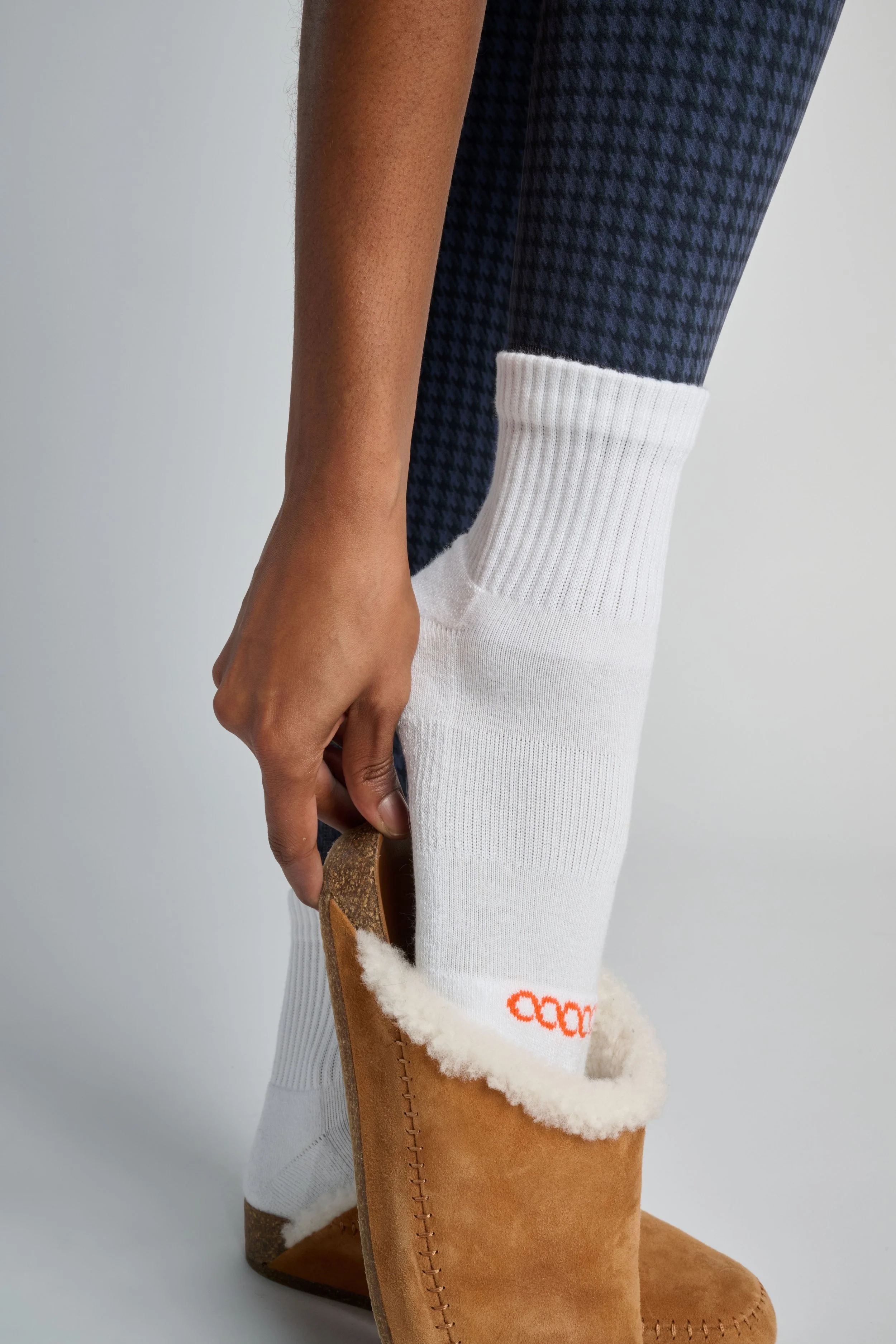
Benefits of moisture wicking socks in cold weather
Read more
1. Keep feet warm (by keeping them dry)
Wet feet = cold feet. Sweat trapped in cotton socks cools quickly and lowers foot temperature.
Moisture-wicking socks move sweat away, preventing heat loss and helping your feet stay warm inside boots.
2. Prevent blisters in layered footwear
Winter activities often involve thick boots. Damp socks inside snug boots increase friction → blisters.
Wicking fabrics reduce moisture buildup, lowering blister risk during long treks or ski sessions.
3. Improve overall comfort
Wicking socks balance insulation and dryness. Many winter socks use merino wool blends, which wick well, insulate even when damp, and feel soft against skin.
4. Reduce odor during multi-day use
In cold weather, you might wear the same gear multiple days. Wicking socks (especially merino) resist odor, making them more practical for trips and expeditions.
5. Support foot health
Damp, cold environments encourage fungal infections and skin breakdown. Moisture management keeps skin healthier.
6. Faster drying between uses
At camp or in a lodge, you can dry wicking socks much faster than cotton ones, which is critical for multi-day winter activities.